
Earthquake and Structural Collapse Drill Protocol for Preschools
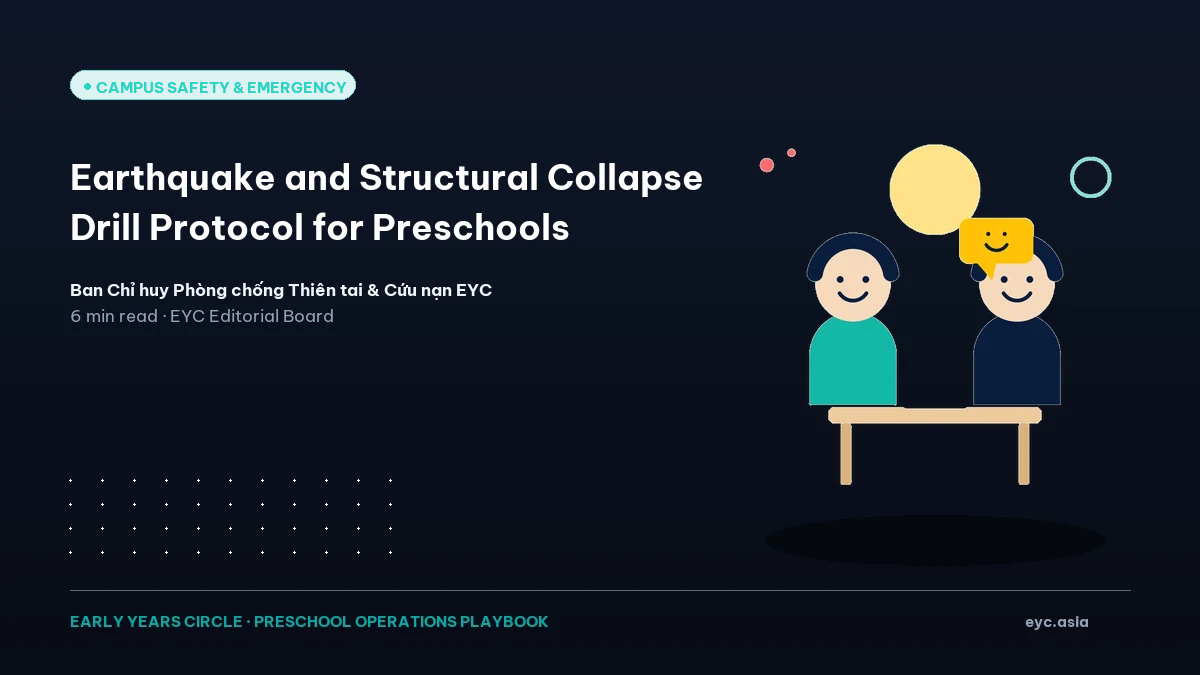
The International Gold Standard: Drop, Cover, and Hold On
Training young children to execute passive defensive postures instantly:
- Drop to hands and knees: Instantly lower center of gravity to avoid being knocked down by ground shaking.
- Cover head and neck: Crawl beneath sturdy wooden desks, protecting the cervical spine and skull.
- Hold On: Grip the table legs firmly with one hand while covering the nape of the neck with the other until shaking halts.
Post-Tremor Orderly Evacuation Protocol
Disciplined building evacuation procedures:
- Do not evacuate during active shaking: Await the all-clear evacuation siren indicating primary tremors have subsided.
- Single-file orderly movement: Enforce 'No pushing, no running, no returning for belongings'.
- Shield heads continuously: Children use sleeping pillows, binders, or soft cushions over their heads during egress.
- Stairs only: Elevators are strictly prohibited due to imminent power failure and entrapment hazards.
Rapid Roster Verification and Field Triage
Immediate actions upon reaching safe assembly zones:
- Instant roll call using emergency classroom roster clips carried by primary educators.
- Report any unaccounted children immediately to the designated Search & Rescue Incident Commander.
- Establish field triage posts: Administer immediate hemorrhage compression and limb splinting.
★Executive Summary
Bi-annual evacuation drills transform complex disaster responses into automatic survival reflexes, safeguarding young lives in unexpected structural emergencies.
Before you apply this guidance
This article provides general information, not legal advice, medical diagnosis, or emergency instructions. Check the rules currently in force and consult the relevant authority or qualified professional for your specific situation.
References
- [1]Cục Quản lý Khẩn cấp Liên bang Hoa Kỳ (FEMA) - Sẵn sàng đối phó động đất trường học· Federal Emergency Management Agency
- [2]Cơ quan Quản lý Thảm họa Nhật Bản - Cẩm nang phòng chống động đất cho nhà trẻ· Japan Disaster Prevention Bureau
Turn guidance into a workable school process
Early Years Circle organizes admissions, tuition, classrooms, food service, and family communication in one connected workflow.
Related resources
Preschool Implementation Guide: 3-Step Food Inspection & 24h Sample Retention per MOH Decision 1246/QD-BYT
Establishing Emergency Response Teams and Duty Allocations in Preschools
Safety Inspection Standards for Preschool Outdoor Playgrounds
Want clearer workflows for your school?
Talk with Early Years Circle about the day-to-day operational needs of your campus.