
The Art of De-escalating and Resolving Preschool Parent Complaints
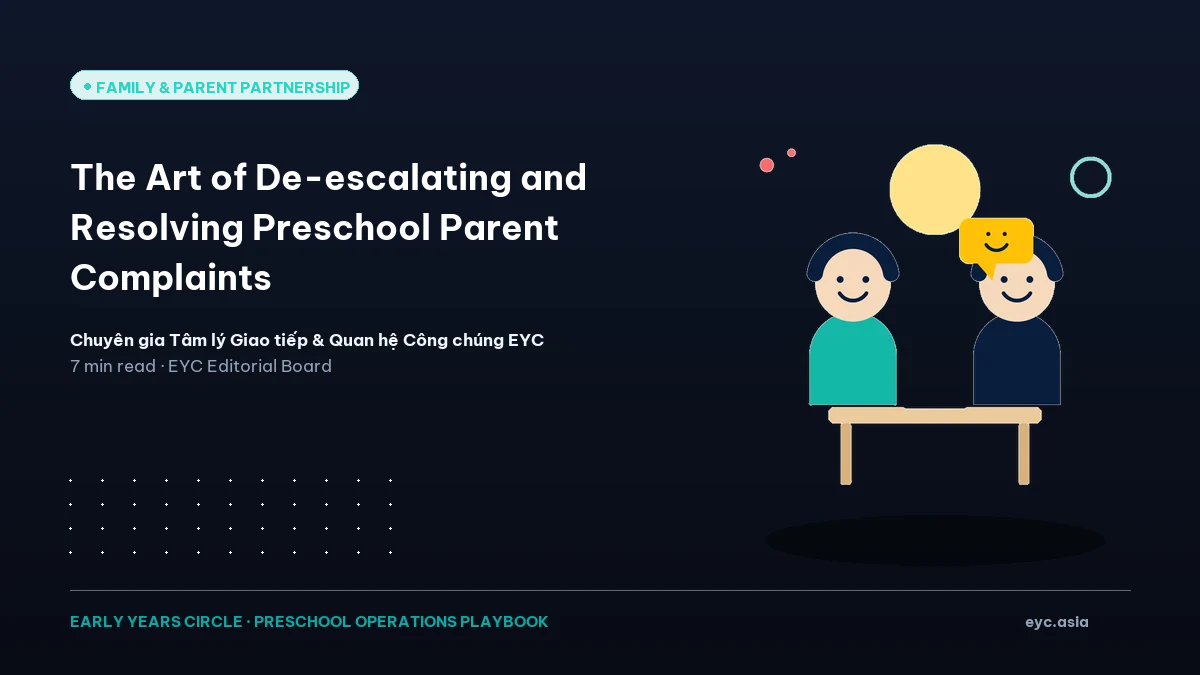
The International LAST Framework for De-escalation
Four structured stages to dissipate emotional hostility:
- L - Listen actively: Permit parents to vent uninterrupted; maintain warm eye contact and take deliberate handwritten notes of specific concerns.
- A - Apologize with empathy: Acknowledge emotional distress sincerely ('We deeply understand how distressing this is and apologize for the worry caused'). Note: Expressing empathy does not concede factual liability before investigating.
- S - Solve collaboratively: Propose structured, time-stamped action plans ('I will review CCTV footage immediately and provide a verified update by 4:00 PM today').
- T - Thank sincerely: Appreciate the family's candor in bringing the breakdown to light, enabling systemic campus improvements.
Spatial Psychology and Collaborative Seating
Architectural and body language cues to de-escalate confrontation:
- Private, serene setting: Host conferences in a comfortable room offering cool water or herbal tea to physically stabilize physiological agitation.
- Collaborative 90-degree seating: Position chairs around a circular table or adjacent at 90-degree angles, eliminating oppositional 'accuser vs. defender' desk barriers.
- Executive leadership presence: Presence of the Principal demonstrates that the institution accords the highest priority to the family's voice.
Objective Fact-Finding and Trust Restoration
Concrete institutional follow-through post-meeting:
- Impartial camera auditing and teacher debriefing: Investigate transparently without defensive cover-ups or premature scapegoating.
- Heightened classroom compassion: Educators provide attentive, nurturing reassurance directly to the student, proving dedication through daily care.
- Proactive 48-hour follow-up call: Leadership calls the family two days later to inquire about the child's wellbeing and parental peace of mind.
★Executive Summary
Masterful complaint resolution blends pedagogical empathy, authentic active listening, and decisive corrective action to preserve family partnership.
Before you apply this guidance
This article provides general information, not legal advice, medical diagnosis, or emergency instructions. Check the rules currently in force and consult the relevant authority or qualified professional for your specific situation.
References
- [1]Đại học Harvard - Chương trình Đàm phán và Giải quyết Xung đột (PON)· Program on Negotiation at Harvard Law School
- [2]Tạp chí Giáo dục Mầm non Trẻ em Trẻ em (Young Children - NAEYC)· National Association for the Education of Young Children
Turn guidance into a workable school process
Early Years Circle organizes admissions, tuition, classrooms, food service, and family communication in one connected workflow.
Related resources
Creating a Professional and Effective Preschool Parent Handbook
Crisis Communications and Reputation Management for Preschools
Systematic Parent Satisfaction Surveys for Preschool Quality Assurance
Want clearer workflows for your school?
Talk with Early Years Circle about the day-to-day operational needs of your campus.